
Blogs for users experience, Blogs how to easy mark or etch
Stop Compromising on Your Brand: Professional Metal Marking, Simplified!
Dec
Why electrochemical etching is the smart alternative to expensive lasers and primitive stamping for modern workshops.
You’ve spent hours designing, machining, and perfecting your product. Whether it’s a custom handcrafted knife, a precision medical instrument, or an industrial component, the final step is crucial: adding your mark.
Your logo is your signature. It’s a promise of quality. But for too long, small to medium-sized workshops have faced a frustrating dilemma when it comes to permanent metal marking:
-
The “Overkill” Option: Investing thousands of dollars (or Euros) in complex laser marking systems that require significant training, maintenance, and floor space.
-
The “Amateur” Option: Resorting to impact stamping or engraving, which can stress the metal, look unprofessional, and ruin the aesthetics of a finely finished surface.
At Eumark, we believe you shouldn’t have to choose between bankruptcy and mediocrity.
There is a third way. It’s used by aerospace giants and artisan makers alike. It’s fast, durable, and surprisingly affordable.
Welcome to the world of professional electrochemical marking.
What is Electrochemical Marking? (And Why Should You Care?)
Don’t let the name intimidate you. The process is elegantly simple. It uses a low-voltage current and a mild, specialized saltwater-based fluid (electrolyte) to permanently etch a design onto a conductive metal surface through a stencil.
Think of it as “controlled rust” that happens in seconds, creating a dark, high-contrast mark that is part of the metal itself, not just sitting on top of it like ink.
Here is why workshops around the world are switching to Eumark systems:
1. Speed That Keeps Up With Production
Time is money. Setting up a laser job for a single part can take 20 minutes. With Eumark, the entire process—from printing a stencil with your new serial number to the final mark—takes less than a minute. The actual marking process often takes just 5 to 10 seconds.
2. Industrial Durability, Zero Stress
This is critical. Unlike impact stamping, electrochemical marking does not deform the metal. Unlike some high-heat laser processes, it doesn’t alter the metallurgical structure or create heat-affected zones.
This makes Eumark the preferred choice for industries where material integrity is paramount, such as aerospace components, surgical tools, and food processing equipment. The mark withstands sterilization, saltwater, and harsh industrial environments.
3. The Economics Just Make Sense
Let’s talk numbers. The cost of entry for a professional Eumark kit is a fraction of a fiber laser. But the real savings are in operation.
-
No expensive replacement bulbs or diodes.
-
Low energy consumption.
-
The consumable cost (electrolyte and stencil paper) averages out to pennies per mark.
Whether you are marking 50 unique pieces a week or 5,000 identical parts a month, the ROI is almost immediate.
4. Versatility on Your Workbench
Stainless steel (inox), aluminum, titanium, brass, tool steel, galvanized surfaces… if it conducts electricity, Eumark can likely mark it. Our portable units mean you can take the marking to the heavy part, rather than bringing the heavy part to a stationary machine.
Who Is Eumark For?
We designed our systems to bridge the gap between the hobbyist and the heavy industrial user.
-
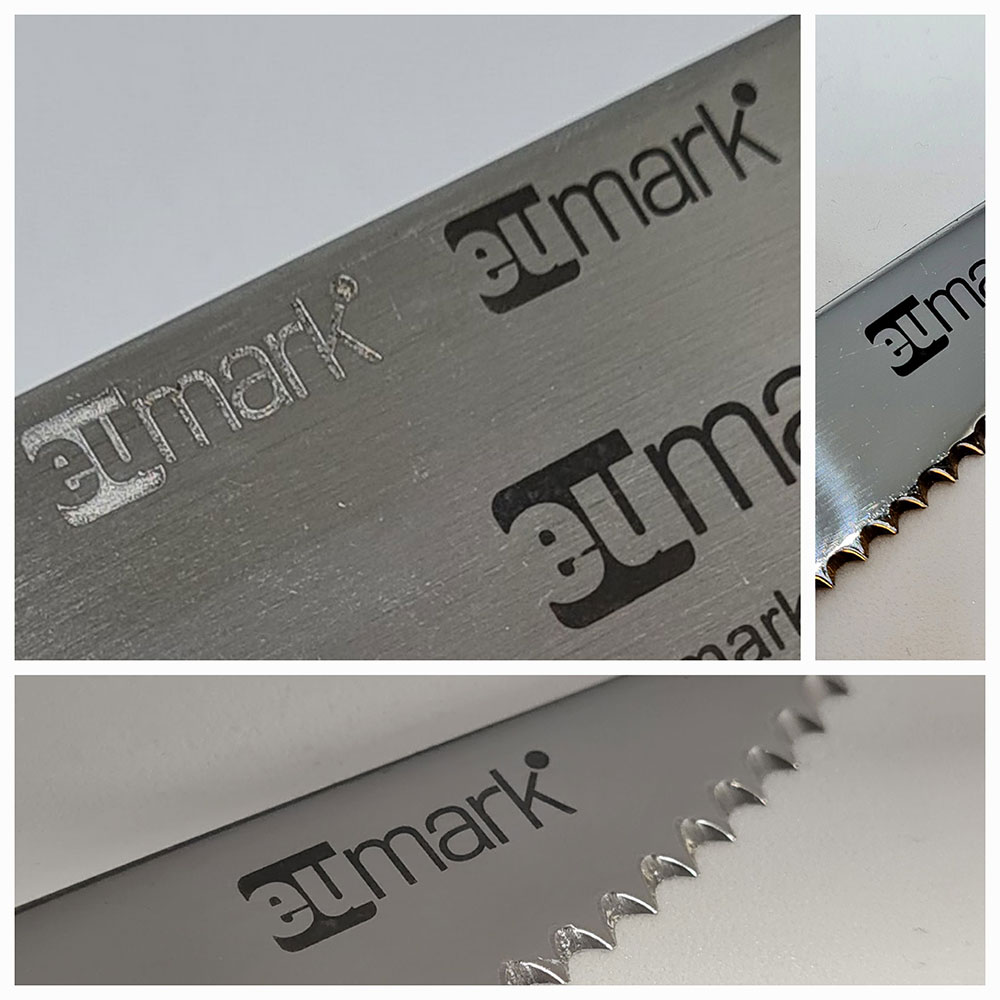
The Custom Knife Maker: Who needs a signature logo on a hardened steel blade without ruining the temper.
-
The CNC Machine Shop: That needs to add batch numbers and QR codes to fulfill a client order quickly.
-
The Quality Control Manager: Who needs a permanent, traceable mark on tools and gauges used on the factory floor.
Conclusion: Your Brand Deserves Better
Your mark is the finishing touch that tells the world: “I stand behind this work.” Don’t let an inferior marking process detract from the quality of your product.
Eumark offers European-engineered quality designed for real-world workshop efficiency. It’s time to upgrade your finish.
Ready to see how it works on your specific material?
👉 [Explore Our Starter Kits EUmark set 04] or [Contact Us] on your material.
#knifemaking #machining #cnc #metalworking #industrialdesign