





EUmark Set 01 — Electrochemical Marking System, Black Oxide and Deep Etch
359.99 €
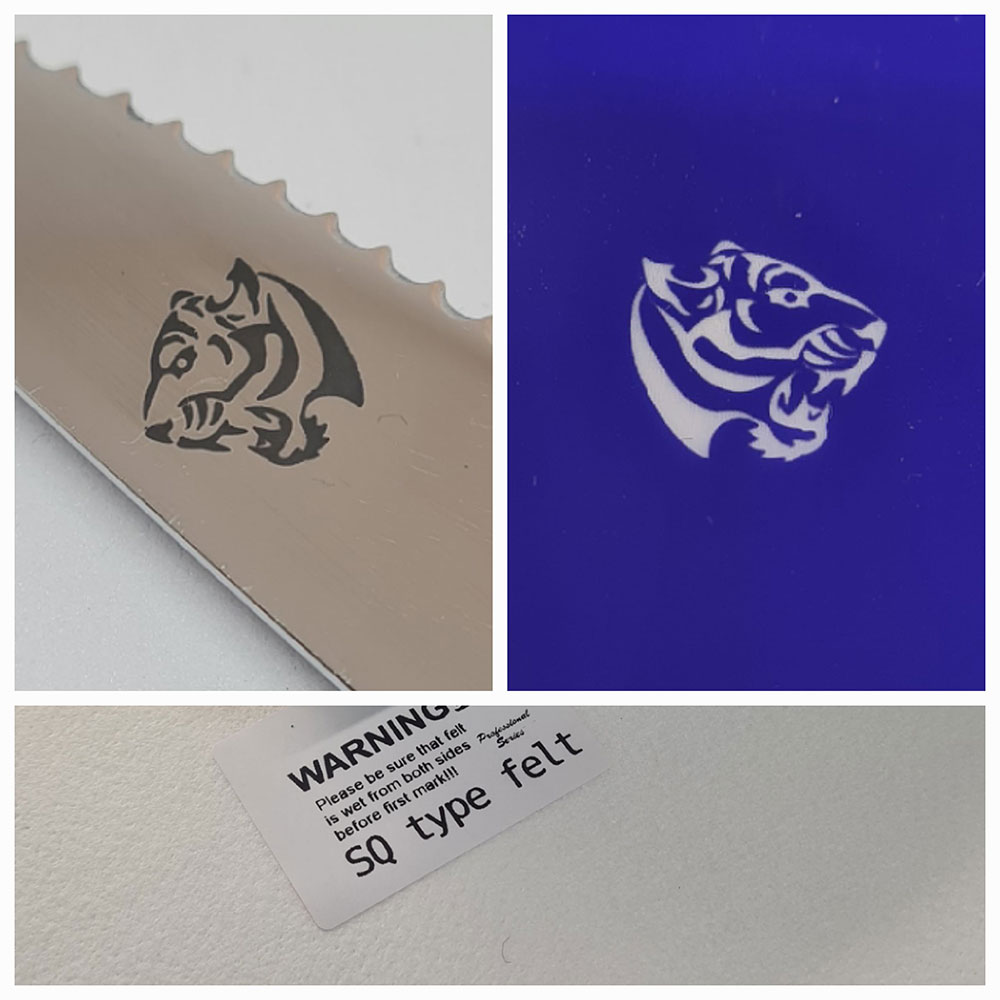
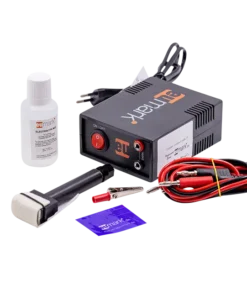
The full EUmark machine — both black oxide marking and deep etch — as a complete system. Non-thermal identification marking in 2–5 seconds, approx. 0.025 mm deep, with no heat-affected zone and no change to hardness, geometry or fatigue properties. All four electrolytes included, each with a safety data sheet. 110/220 V, ready for the EU, UK and beyond.
EUmark Set 01 — electrochemical marking system, black oxide and deep etch
A permanent identification mark is only useful if it does not compromise the part it is applied to. Stamping deforms. Rotary engraving removes load-bearing material. Laser marking introduces a heat-affected zone that has to be justified on fatigue-critical and corrosion-critical components, and brings an enclosure and a laser safety programme with it.
Electrochemical marking takes a different route: a controlled low-voltage current carries an electrolyte through a stencil into the part, converting the surface chemistry in the exposed pattern. Nothing melts, nothing is displaced. Set 01 is the least expensive way to specify the full machine — both marking modes, no compromise on capability.
Two marking modes
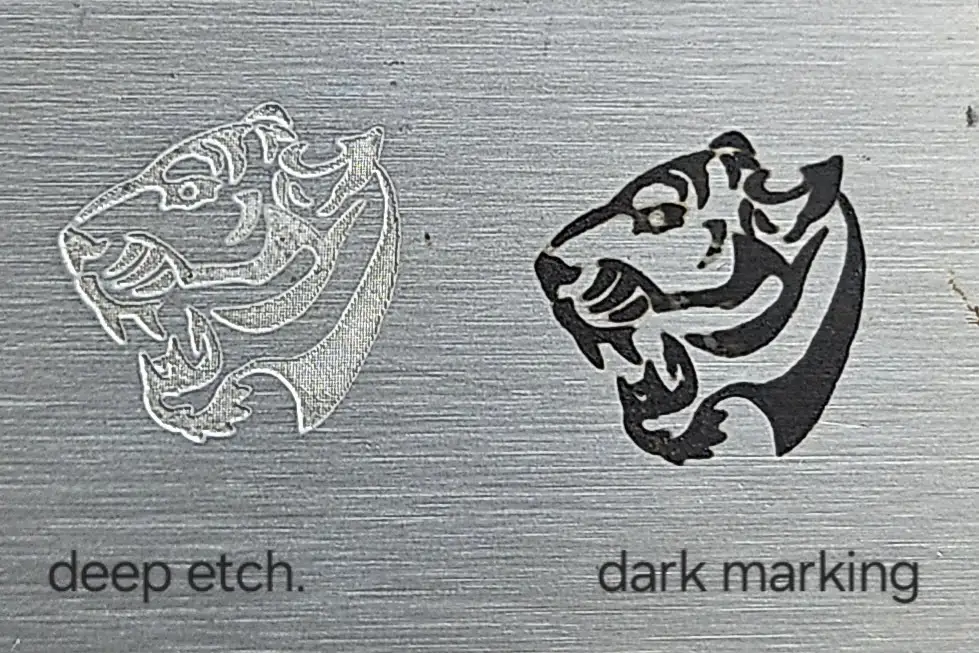
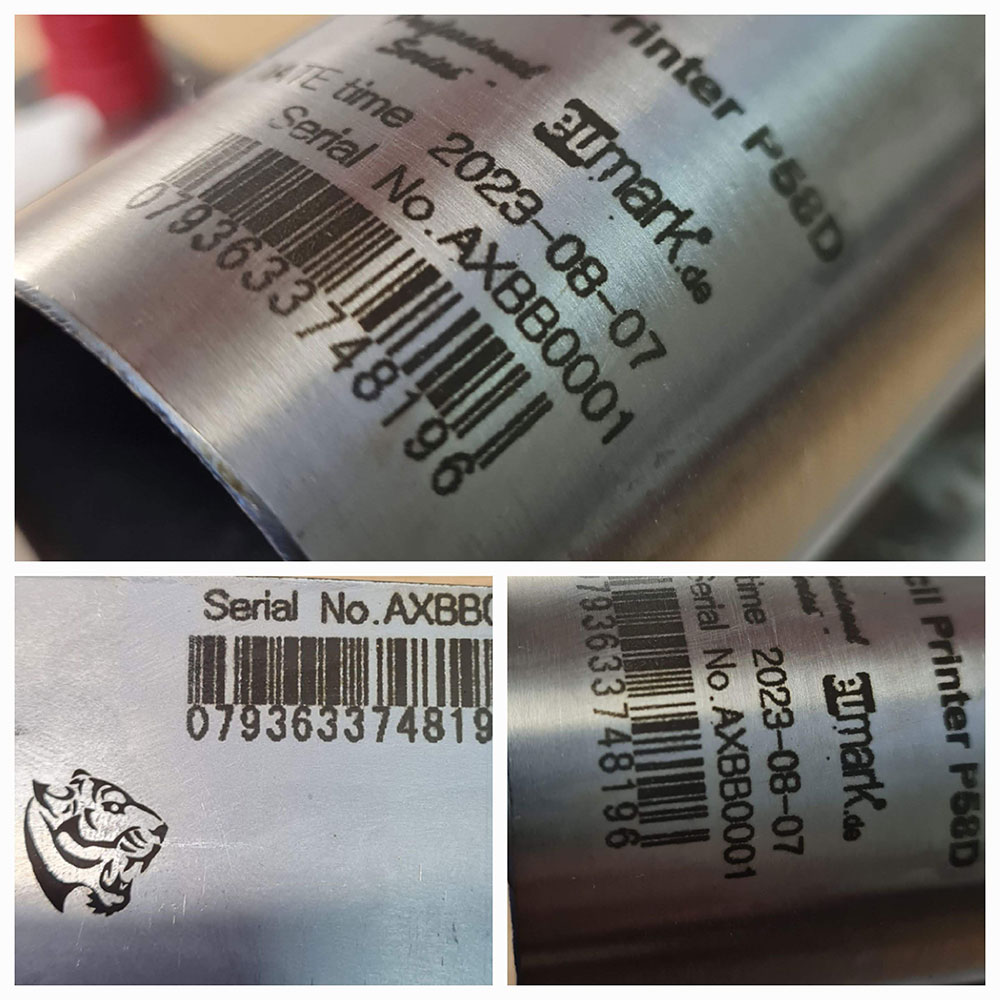
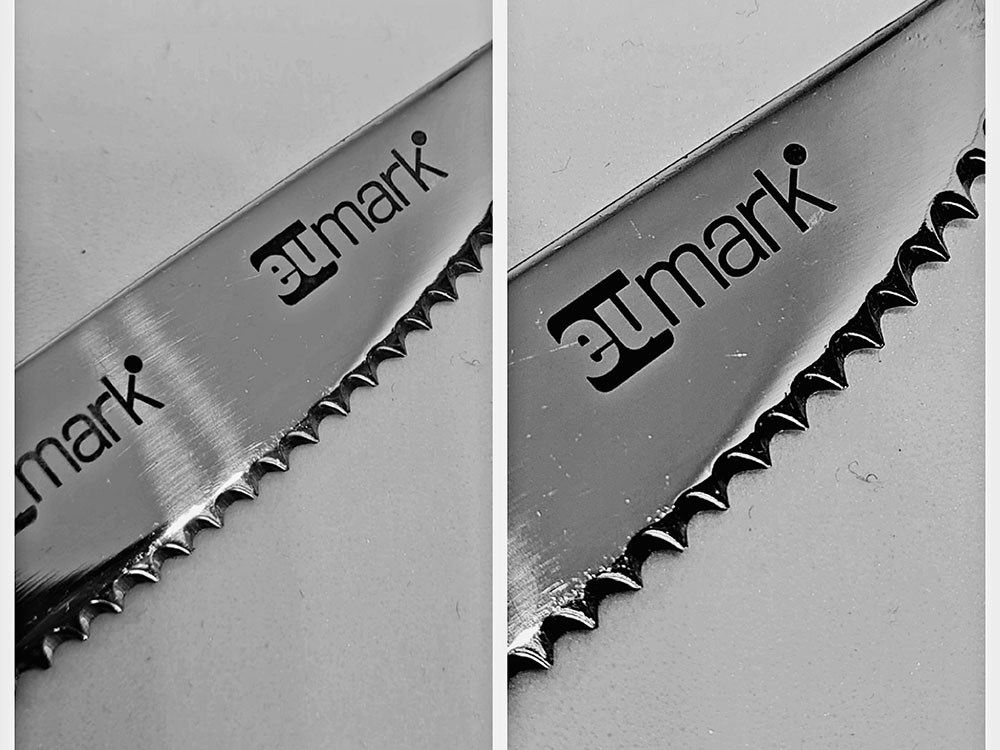
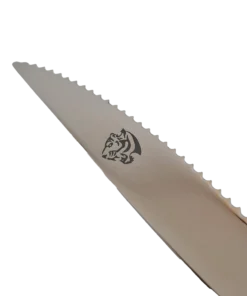
- Black oxide marking — shallow, high-contrast dark mark, suited to most identification work.
- Deep etch, light marking — a recessed mark with genuine depth, for identification that must remain legible through further finishing, handling, or years of abrasive service.
The compact systems — Set 05, 06 and 07 — run black oxide marking only. Where a drawing specifies etch depth rather than contrast alone, the full machine is required, and Set 01 is the most direct way to specify it.
What Set 01 does not include
There is no stencil printer in this configuration. Marking is done with long-life photo stencils, produced from your artwork and good for up to 5,000 marks — the right arrangement for a fixed logo, certification mark or part identifier that repeats.
Where a printer would help — different content on different parts, printed in minutes rather than ordered and waited for — Set 02 and Set 03 are the direct step up: the same full machine with a stencil printer added. A printer is also available separately and works with this machine.
Marking specifications customers bring us
- EU MDR 2017/745 — UDI carriers and identification on reusable instruments, where the mark must survive the full reprocessing life
- EN ISO 13485 / EN 9100 — part, serial and lot identification inside a quality management system
- Customer drawing notes specifying a permanent, non-destructive marking method that does not alter the base material
The equipment itself carries no certification — no marking system does. Compliance sits with the marked part and with your qualification of the process. That qualification stays short because only five variables control the outcome: current mode, dwell time, electrolyte, felt saturation and stencil condition.
What the process does to the part
| Property | Effect | Why it matters |
|---|---|---|
| Heat input | none | No HAZ to disposition on heat-treated alloys |
| Residual stress | none added | Fatigue allowables unaffected |
| Material removal | ~0.025 mm surface conversion | Safe on thin-wall sections and finished dimensions |
| Burrs | none | No deburring operation after marking |
| Corrosion resistance | preserved | Neutralise with N11, then passivate as normal |
Materials and one honest caveat
The process works on any electrically conductive metal — stainless steel, tool steel, carbon steel, titanium, brass, chrome-plated surfaces. Aluminium needs a different approach. It forms a non-conductive oxide layer almost immediately on exposure to air, which is what gives a grey or dull result instead of a crisp dark one — and many aluminium alloys contain magnesium and silicon, which complicates marking further. If aluminium is your material, tell us the alloy and we will confirm the right settings before you order.
Kit contents
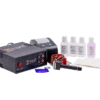
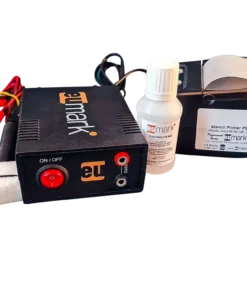
- EUmark marking unit, 110 V / 220 V, with power and marking cables
- Hand stamp (marking head)
- Marking felt
- Electrolytes M21, M22, M23 and N11 Neutralyte
- Sample long-life stencil and sample printed stencil
The four fluids
| Fluid | Behaviour | Use it when |
|---|---|---|
| M21 | Self-cleaning; many marks from one wetting of the felt | Running a batch without stopping to re-wet between parts |
| M22 | Very dark mark, used for deep etch; felt needs washing after use | Maximum contrast, or where the drawing calls for depth |
| M23 | Non-corrosive; wipe with a dry cloth after marking | Corrosion-sensitive materials, or where wet neutralisation is impractical |
| N11 Neutralyte | Protects the marked surface after etching | Standard finishing step after M21 or M22 |
Every fluid ships with a safety data sheet, required by most quality systems for incoming inspection and the audit file. A 200 ml bottle covers up to 20,000 marks. Trial marking on your own material is a required step, not optional — alloy, condition and finish all affect the result. Send a coupon and we will run the first trial for you.
Specifications
| Process | Electrochemical (electrolytic) marking, AC and DC |
|---|---|
| Marking modes | Black oxide marking and deep etch |
| Mains supply | 110 V / 220 V AC, ready for EU, UK and US, no conversion |
| Output voltage | 10–15 V |
| Maximum output current | 15 A |
| Power consumption | up to 150 W at peak |
| Marking cycle | 2–5 seconds per mark |
| Full cycle per part | approx. 10 seconds, mark to next part loaded |
| Mark depth | approx. 0.025 mm, deeper in etch mode |
| Marking unit dimensions | 160 × 160 × 65 mm |
| Warranty | 24 months |
| Expected service life | over 10 years |
| Manufacture | EUmark, Serbia — in production since 1999 |
Delivery within the EU and UK
Consignments dispatch from Serbia. Under the Stabilisation and Association Agreement, goods of Serbian preferential origin enter the EU at zero duty on presentation of an EUR.1 movement certificate or an invoice declaration, which accompanies every shipment. UK consignments are handled the same way under the UK–Serbia agreement.
Before you order
Send the alloy, component geometry, marking content and your annual volume. We will confirm the right configuration — including whether Set 01 covers it, or whether a printer-equipped or compact system fits better. eumark@eumark.de
Related products

Electrochemical etching sets
EUmark Set 02 — Electrochemical Marking System with Stencil Printer
Electrochemical etching sets
Electrochemical etching sets
Electrochemical etching sets
Electrochemical Marking and Etching Machine EUmark SUPER SET 04

Electrochemical etching sets
EUmark Set 03 — Electrochemical Marking System with Consumable Stock
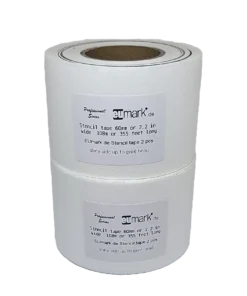
Electrochemical etching sets
EUmark Set 07 — Compact Serial Number Marking System with CD410 Printer

